How Real Estate Works in Connecticut
Real estate in Connecticut works a little differently than many other states and understanding how it functions before you start looking at towns, homes, or timing can save you a lot of frustration later. This page is designed to give you a clear, practical overview of how the Connecticut real estate system works, what makes it different from other parts of the country, and what to expect before you choose a town or make a move. If you’re still in the research phase, you’re exactly where you should be.
How the Connecticut Real Estate Process Is Different
One of the biggest differences in Connecticut real estate is that attorneys play a central role in the transaction. Unlike many states where closings are handled primarily by title companies, Connecticut is an attorney-led closing state.
After an offer is accepted, both buyers and sellers are represented by their own real estate attorneys. Contracts are reviewed by attorneys, inspections follow a defined timeline, and legal oversight continues all the way through closing.
In general terms, a Connecticut transaction follows this flow:
- Offer accepted
- Attorney review and contract finalization
- Home inspections and due diligence
- Mortgage approval and final underwriting
- Closing with attorneys present
Timelines can vary based on financing, inspections, and property type, but most transactions fall within a predictable range once under contract. Understanding this structure upfront helps reduce stress and avoids surprises later.
Buyers relocating from New York often notice several differences in how Connecticut real estate transactions work. You can learn more in our Moving from New York to Connecticut guide.
Relocating to Connecticut? Our relocation guide explains how town choice, timing, and the local buying process work for out-of-state buyers.
Connecticut Market Overview (Statewide Perspective)
Connecticut real estate does not always move in lockstep with national housing headlines. While broader trends matter, housing here is heavily influenced by local supply, commuting patterns, and long-term ownership.
Seasonality plays a role, with activity typically increasing in the spring and early summer and slowing later in the year. Inventory levels and competition can vary significantly by region and price point, which is why statewide averages rarely tell the full story.
What remains consistent is that Connecticut is a hyper-local market. Conditions can change dramatically from one town to the next, making local knowledge far more valuable than national statistics.
Property Taxes and Cost Considerations in Connecticut
Property taxes are one of the most common questions buyers and sellers ask — and for good reason. Connecticut property taxes are set at the town level, which is why tax bills can vary widely even within the same county.
Rather than focusing on specific tax rates, it’s more important to understand how the system works:
- Each town sets its own mill rate
- Assessments and budgets are handled locally
- Services, infrastructure, and school funding all factor into tax levels
In Connecticut, municipalities also assess a separate motor vehicle property tax. Vehicle taxes are calculated using the town’s mill rate, similar to real estate, and are billed annually. While this is a normal part of homeownership in Connecticut, it’s often unfamiliar to buyers relocating from other states.
Beyond property taxes, homeowners in Connecticut should also plan for costs related to:
- Heating systems, including oil, gas, electric, or alternative sources
- Utility costs and ongoing maintenance for an older housing stock
- Seasonal considerations, especially for single-family homes
Factoring these costs into your decision early leads to better long-term outcomes — whether you’re buying your next home or preparing to sell.
Buying a Home in Connecticut
This is a high-level overview of the buying process in Connecticut, not a step-by-step checklist.
Buying a home in Connecticut often looks similar on the surface to other states, but the details matter. Inventory levels, pricing dynamics, and local competition can vary widely depending on location, price point, and timing.
In many parts of the state, buyers need to be prepared to act decisively while still protecting themselves with proper inspections and legal review. Understanding the local market — not just statewide trends — plays a critical role in writing strong offers and navigating negotiations.
If you’re early in the process, our Buyer Resources section breaks down the Connecticut buying process in more detail.
Selling a House in Connecticut
This section explains how selling works in Connecticut at a broad level, before strategy or timing decisions are made.
Selling a house in Connecticut requires a thoughtful approach that balances pricing, preparation, and timing. Buyers here tend to be well-informed and selective, and they respond best to homes that are positioned clearly and realistically from the start.
Pricing strategies in Connecticut are particularly sensitive to local conditions. Even small differences between towns — or between neighborhoods within the same town — can affect buyer demand and time on market. Preparation also plays an important role, as buyers often compare condition, layout, and maintenance closely.
Understanding how Connecticut buyers evaluate homes helps sellers make informed decisions long before a house goes on the market.
If you’re considering selling in the future, our Seller Resources section provides additional guidance on preparing and selling a house in Connecticut.
Many homeowners start by asking what their house might be worth and how value is determined in the current market.
Homeowners often ask whether they should sell before buying or buy before selling. We walk through that decision in detail in Sell First or Buy First? How to Decide.
Understanding Connecticut’s Regions (Big Picture)
Connecticut offers a wide range of living environments, from commuter-friendly suburbs to more rural and lifestyle-oriented areas. While the state is geographically small, day-to-day living can feel very different depending on where you are.
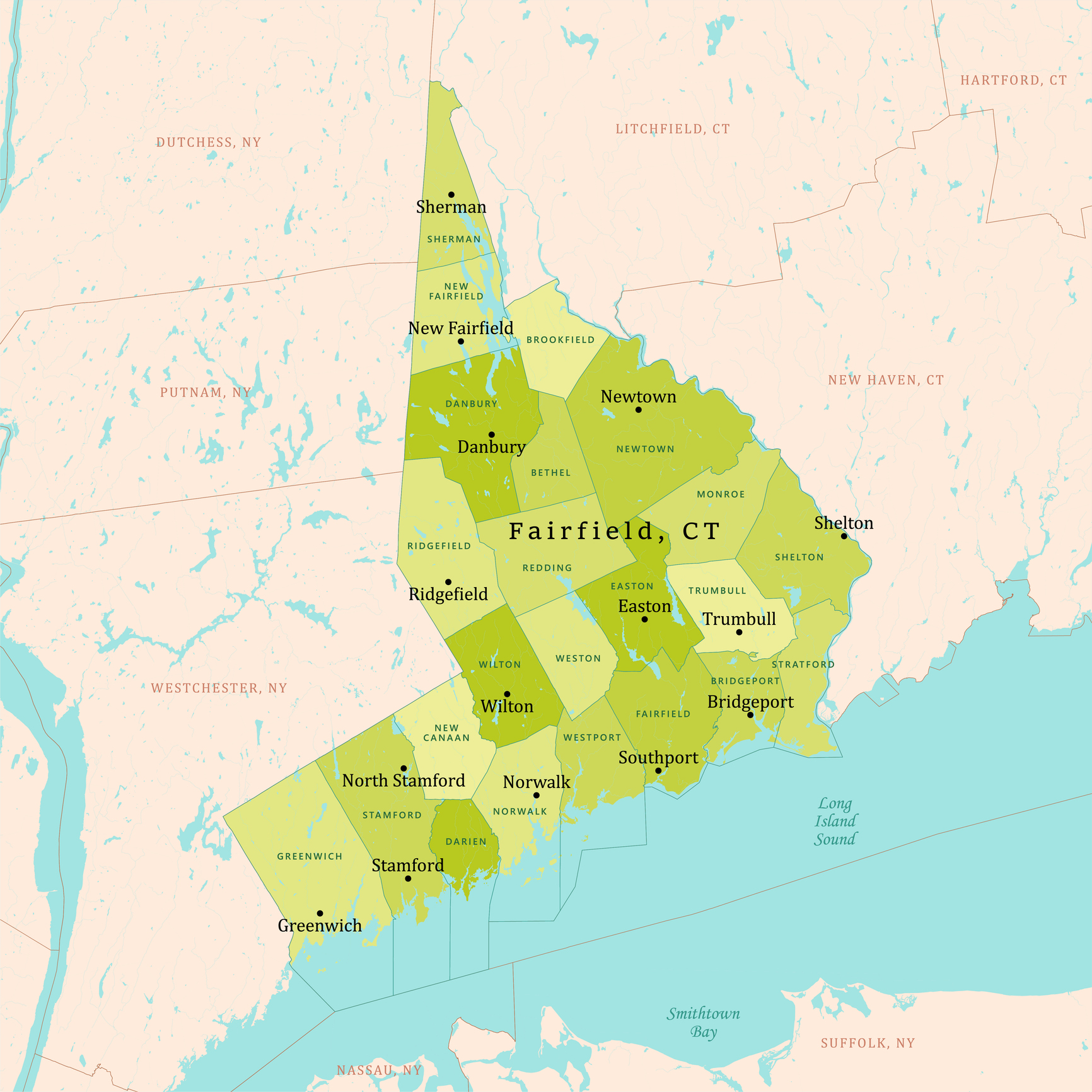
Fairfield County sits along Connecticut’s southwestern coastline and borders both New York and neighboring Connecticut counties. Seeing how Fairfield County relates to surrounding regions, waterways, and towns provides helpful geographic context when comparing local real estate markets.
Some regions appeal to buyers focused on commuting access, while others attract those prioritizing space, privacy, or a slower pace. Housing styles, lot sizes, and overall feel can shift significantly across the state, which is why narrowing your priorities early is helpful before focusing on individual towns.
This broader understanding makes it easier to evaluate which areas align with your lifestyle, budget, and long-term plans.
Explore Connecticut Town Guides
Once you understand how real estate works across Connecticut, exploring individual towns becomes more meaningful. Each community has its own character, pricing patterns, and lifestyle considerations — and those differences matter. While statewide trends provide helpful context, real estate decisions here are ultimately made at the local level.
Each town has its own character, housing mix, tax structure, and market dynamics. Exploring individual town guides allows you to see how those differences translate into day-to-day living and local housing options.
Explore Homes for Sale in Northern Fairfield County Towns
Click any town below to explore homes for sale and local area details.
A Local, Long-Term Approach
This page is intentionally educational, but it’s also grounded in how we work with clients every day.
Real estate decisions are rarely made overnight. Whether you’re planning a move months from now or simply gathering information, having clear, accurate guidance makes the process smoother.
With decades of experience in Connecticut real estate, Bob and Richelle Ward focus on helping clients understand their options and make informed decisions at their own pace. The goal is always the same: thoughtful guidance, honest communication, and long-term relationships built on trust.
When you’re ready to take the next step, we’re here to help.



© 2026 Coldwell Banker Real Estate LLC
203-244-2900